
Why Holistic Medicine Is Returning to the Center of Women's Health in Africa
OURbody founder Chelsea Jambo on why the remedies women passed down for generations were never a quaint alternative to medicine — they were filling gaps a research system built on non-African, non-female bodies never closed.
By Fern Capital Group
Originally published as a Forbes BrandVoice paid program.
This is not a story of progress, but rather what women have quietly done for themselves while medical establishments seemingly took their time. The future depends on bringing the two together.
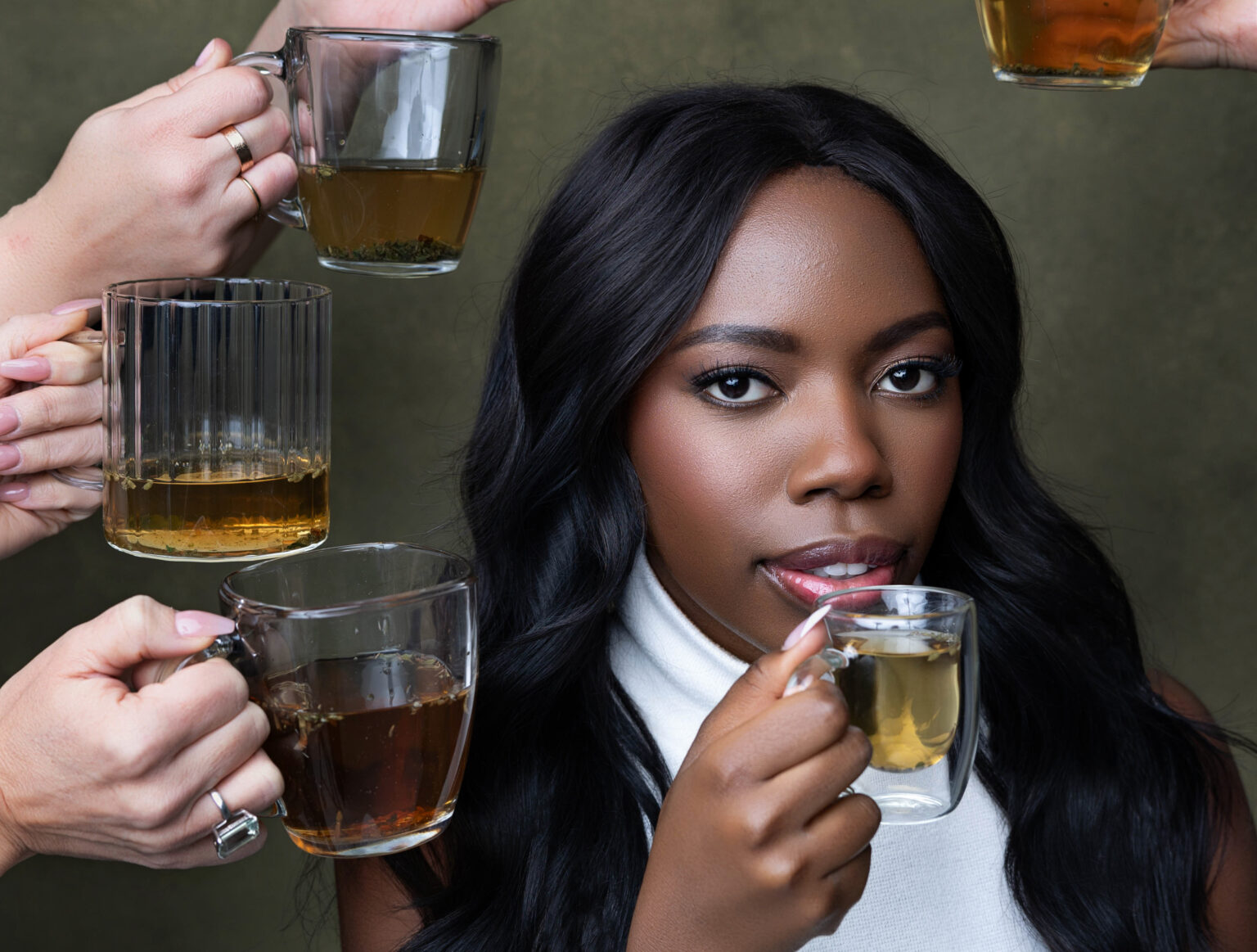
Long before consultations with medical professionals, women were already treating themselves. They were brewing roots for cramps, steeping leaves for nausea, and passing down remedies from grandmother to mother to daughter in kitchens that were, for most of history, the only space a woman could trust.
“We do not call that medicine now. But it was medicine, and in many cases, it was the only medicine the female body had ever been given.”
Chelsea Jambo, Founder and CEO, OURbody
A 2026 analysis in the Journal of the American College of Cardiology (JACC), which examined over 2,400 randomized trials across five medical journals between 2019 and 2024, found that 3.9% were conducted exclusively in Africa, a continent that bears a substantial share of the global disease burden and is home to nearly a fifth of the world's population. The information that shapes how doctors diagnose, how pharmaceutical companies determine doses, and how treatment protocols are written into clinical practice has been built largely on bodies that are not African, female and, rarely, both at once.
“When a population is missing from the research, it does not simply remain unstudied. It becomes invisible to the system designed to serve them.”
Chelsea Jambo, Founder and CEO, OURbody
The gaps traditional remedies filled
The remedies passed down were not a quaint alternative to this system; they were fillers for the gaps the system created — gaps women across the continent stepped in to occupy. These gaps remain. According to the World Health Organization, endometriosis affects roughly one in 10 women of reproductive age, and the average time to diagnosis currently sits between four and 12 years, with a 2024 systematic review from the University of York placing the global average at 6.6 years and some healthcare systems stretching that delay as far as 27.
The same pattern persists in conditions such as PCOS, in perimenopause symptoms that are still routinely misattributed to anxiety, and in heart attacks that are missed in female patients because the emergency diagnostic criteria have, historically, been shaped around male presentations.
What breast cancer reveals about age-based screening
Breast cancer may be the clearest example of what happens when systems fail to recognize women outside the age bracket for which most data is designed. A 2025 study in the Journal of the National Cancer Institute, conducted by the International Agency for Research on Cancer across five sub-Saharan African countries, found that women diagnosed before the age of 40 had lower survival rates than those diagnosed later. Mortality was highest among younger women diagnosed within three years of giving birth.
Routine screening guidelines were built around an older demographic, meaning younger women are not screened, are not diagnosed early, and often present with advanced disease. The Breast Cancer Research Foundation has noted that women under 40 are nearly 40% more likely to die from breast cancer than women over 40.
The honest question, then, is not why younger women present with a more aggressive form of the disease; it is how many had been describing symptoms for years but were dismissed because they had not yet reached the age bracket deemed eligible for screening. The answer, if the medical community is willing to sit with it, is uncomfortable.
Women are already redirecting their trust
“What is striking, and what the industry has not yet fully reckoned with, is that women have already begun addressing this gap themselves, turning to an approach the medical establishment spent generations dismissing.”
Chelsea Jambo, Founder and CEO, OURbody
The global complementary and alternative medicine market was valued at approximately $180 billion in 2024 and is projected to surpass $800 billion by the early 2030s, according to 2025 Data Bridge Market Research. In Africa, the World Health Organization estimates that up to 80% of the population relies on traditional and herbal medicine for primary healthcare, with women identified as the primary users.
In 2025, the WHO adopted a Global Traditional Medicine Strategy formally endorsing the integration of these approaches into national health systems over the coming decade, and it previously reported that 17 African countries had established frameworks for the protection of traditional medical knowledge, up from zero in 2000.
The shift the organization is now urging, globally, is one that African nations have been quietly building. It reflects what happens when a historically underserved patient population decides, at scale, that the care it is being offered is incomplete, and begins redirecting its time, money, and trust toward something that treats the whole body as worth understanding rather than a collection of symptoms worth suppressing.
Complement, not alternative
This is the space OURbody was built to occupy: a certified-organic hormonal wellness tea brand that supports women through three distinct phases of the hormonal journey — menstrual, perimenopausal, and menopausal. The approach is phase-based because the female body is phase-based, and the purpose is to give women something to use during the long stretches between appointments.
“A healthcare system that truly respected the female body would not treat a six-year average diagnostic delay as acceptable, rely on age-based screening cut-offs while ignoring the women presenting earlier, or prescribe birth control as a default response to complaints it has not taken the time to investigate. A wellness industry that truly served women would not position itself as an alternative to medicine either, because the framing of 'alternative' has always been part of the problem.”
Chelsea Jambo, Founder and CEO, OURbody
Holistic medicine is not an alternative to Western medicine; it complements it. A woman who drinks tea to support her cycle and sees her doctor for bloodwork is not making a contradictory choice — she is making a complete one. The future of women's health depends on whether these systems can be treated as partners rather than opposites, and whether the institutions that have historically overlooked the female body are willing to do the slower, more uncomfortable work of integrating traditions they once dismissed.

More from Fern
Public grant propels an early bet on continuous hormone sensing — why investors should pay attention
Small seed, strategic signal: Chiron’s AI self‑management platform positions continuous care as a playbook for women’s health gaps

ESHRE 2026: A turning point — IVF effectiveness is rising while cost and environment become the new bottlenecks
Stay Informed
Women's health is moving fast. Keep up.
Get Fern's latest research, investment commentary, and event invitations delivered to your inbox.